Matching questions ask learners to pair items from one list with corresponding items in another. Some examples include matching terms with definitions, causes with effects, tools with their uses. Because each item must be paired correctly among several plausible options, guessing correctly by chance is low, particularly as the number of pairs increases. This format is well suited to testing relational knowledge. It checks whether a learner understands how concepts connect to one another, not just that each one exists in isolation.
Good matching questions are harder to write than they first appear. If pairs can be worked out through elimination, formatting cues, or obvious one-to-one associations (like matching a country to its capital when only one option even sounds like a place), the question stops testing subject knowledge and starts testing process of elimination. Writers should aim for pairs that require genuine understanding of the relationship being tested, not just recognition of a familiar association.
Matching questions can also assess more than simple recall. When written well, they can require a learner to distinguish between closely related concepts, apply a rule across multiple cases, or recognize a relationship in a new context. This makes them useful for testing conceptual understanding, not just rote association and memorization.
Matching questions should be:
- Clearly worded, with only one possible interpretation of the relationship being tested
- Free of negatives (e.g., "which of the following does NOT pair with...")
- Free of qualifiers ("usually," "sometimes," "often") and absolutes ("always," "never," "all," "none")
A few things worth adding that are specific to matching:
- Each item should have exactly one correct match—avoid pairs that could reasonably connect to more than one item on the other side
- Keep the two lists close in length, and consider including one or two extra options on the response side so the last pair can't be answered by default elimination
- Items within each list should be parallel in length, structure, and category, so a correct match isn't hinted at by phrasing or format alone
- Limit the list to a manageable number of pairs (typically 4–7); longer lists increase cognitive load without adding much diagnostic value
- Avoid overlapping or ambiguous terms on the same list (e.g., two definitions that could both fit one term), since these undermine the "one correct pair" structure
Instructions
- Add the Quiz block and configure the Quiz Settings section. For additional details on configuring the section, refer to How do I create a quiz?.
- Once the Quiz Settings are configured, use the Manage Questions section to begin adding questions.
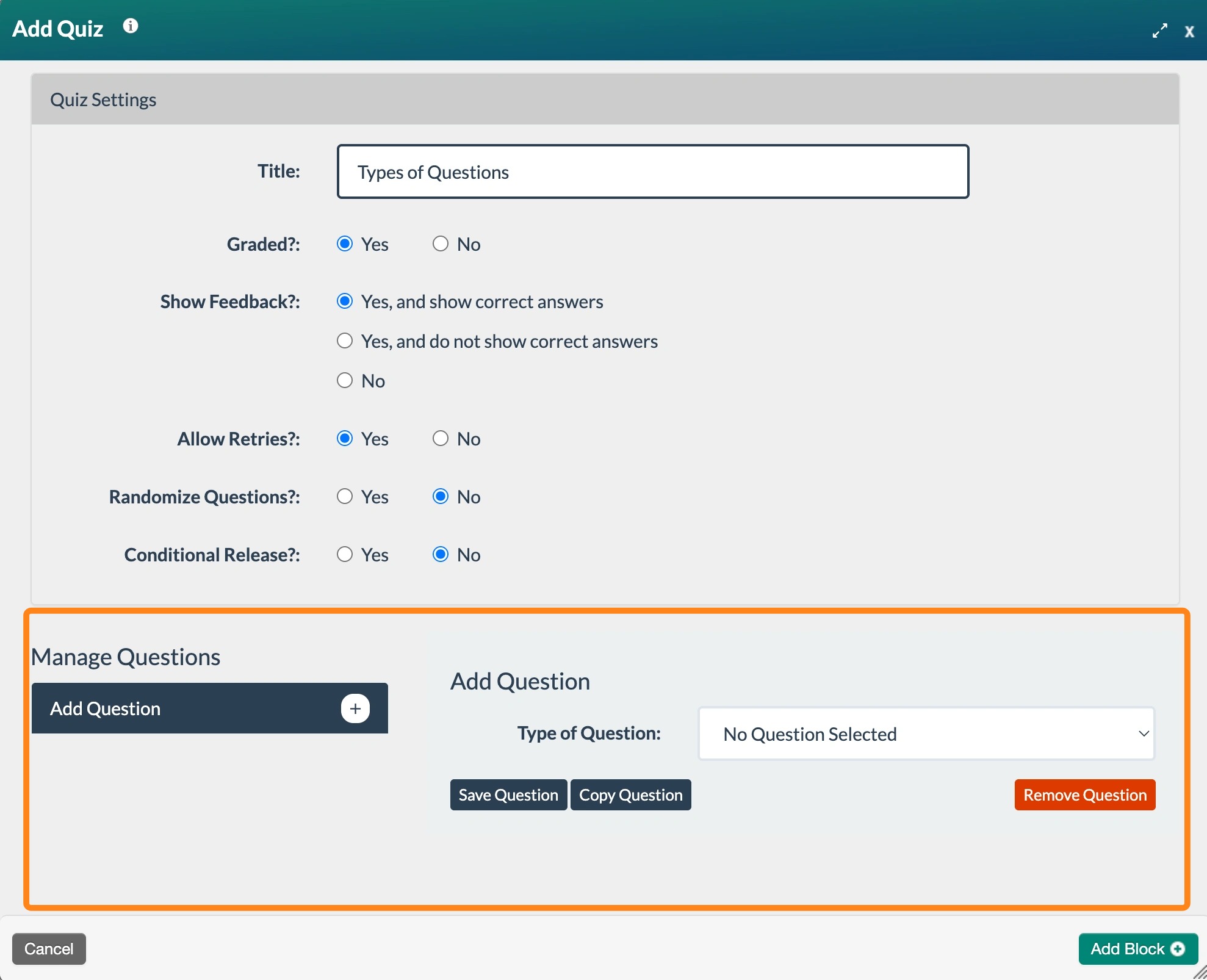
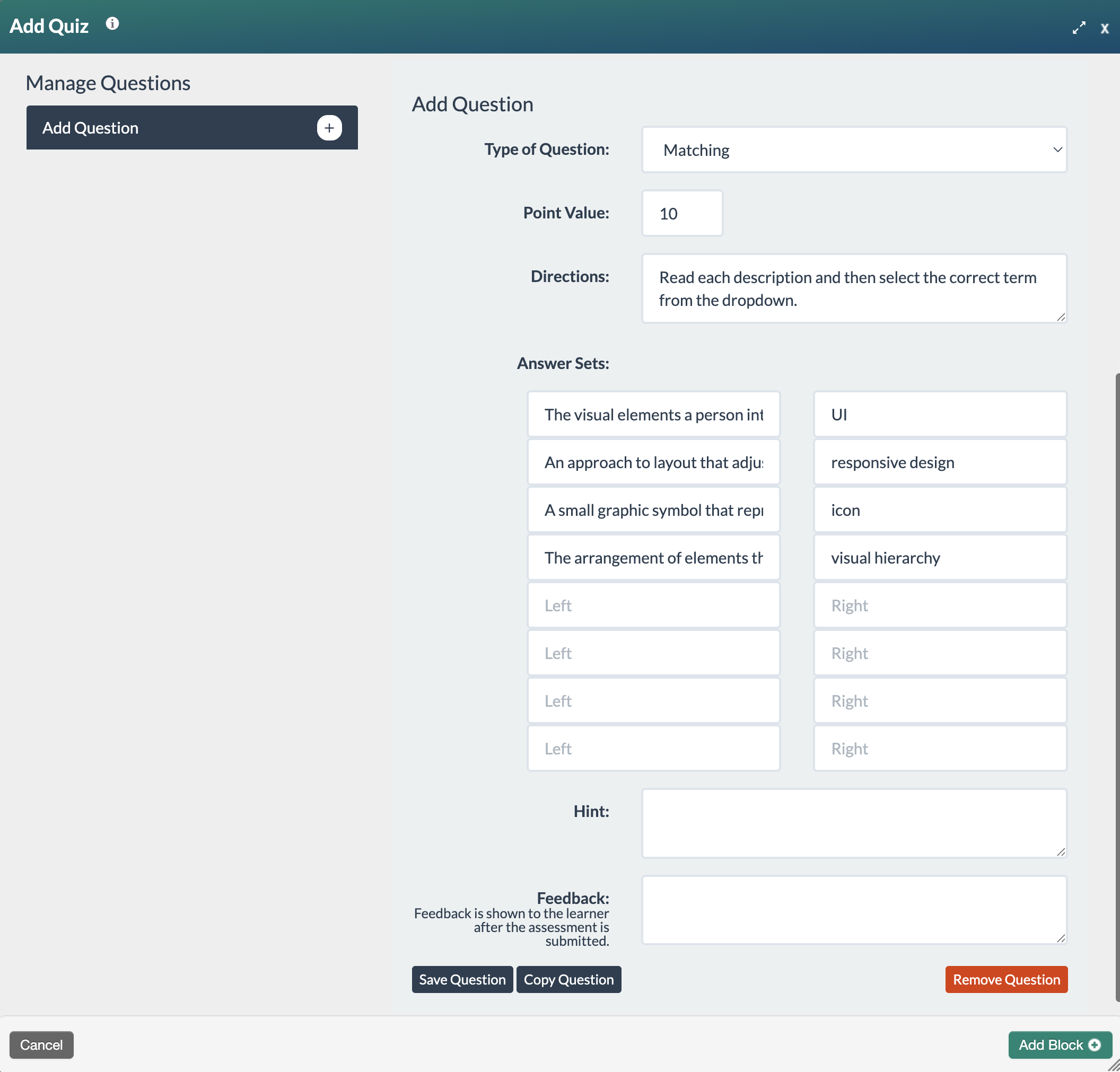
- Add a Matching Answer question by following these steps:
- From the Type of Question dropdown, select Matching.
- Enter the point value in the Point Value field.
(Note: This option will not appear if the course settings are set to No Grading or the Quiz block setting Grading? is set to No.) - Enter your question prompt in the Directions field.
- In Answer Sets, enter the matching pairs in the Left and Right fields.
- (Optional) Enter text in the Hint field. If provided, a Show Hint button will appear on the page, giving learners optional support before they answer. Leave this field blank if no hint is needed.
- (Optional) If Feedback is set to Yes in the Quiz Settings, you can enter customized feedback.
- Click the Save Question button. Repeat this process to add additional questions.
- Once all the required questions have been added, select the Add Block+ button to save the block to the page.
- The new block will appear on the page in Edit Mode with a red, dotted outline indicating it's editable.
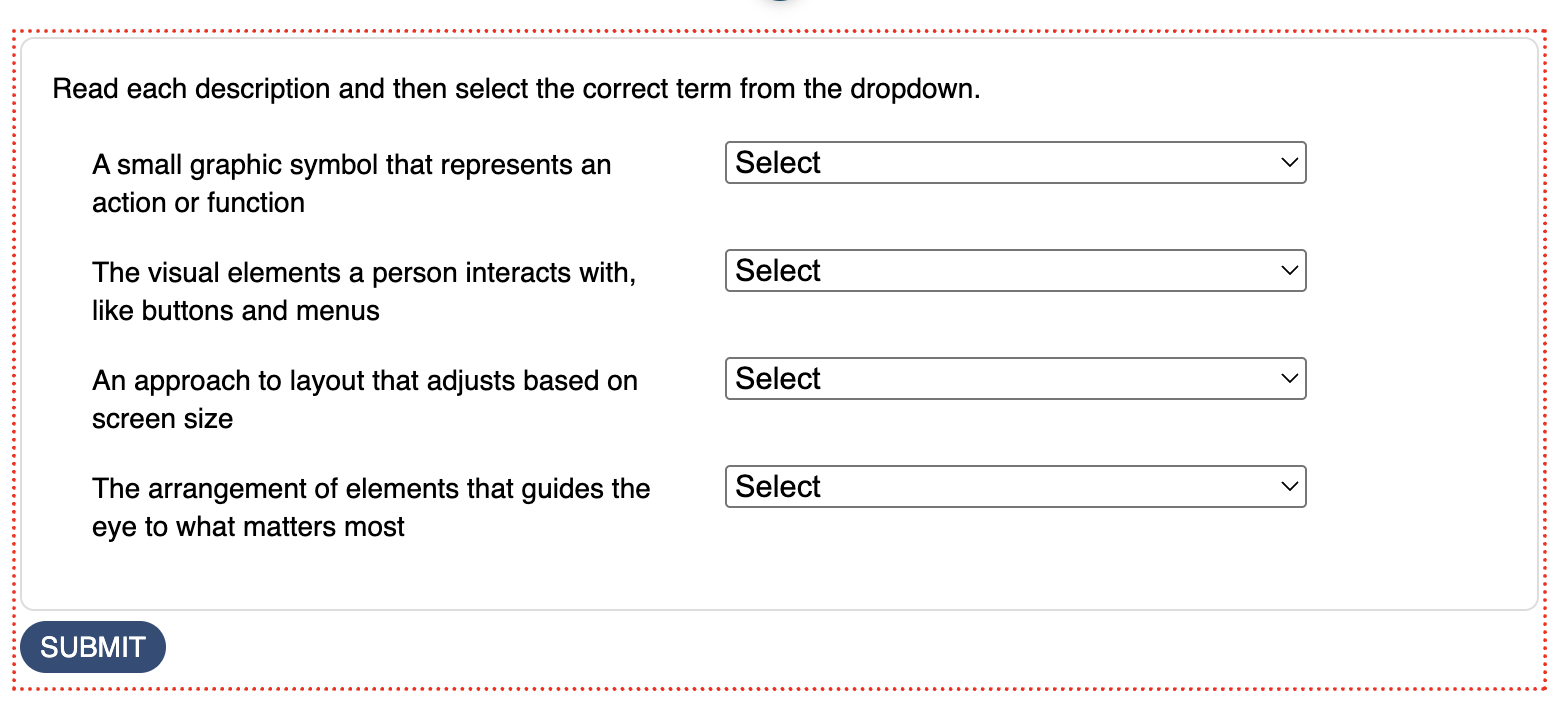
- Select the Publish My Edits button to save the question to the course page and see the content as it will appear to learners.
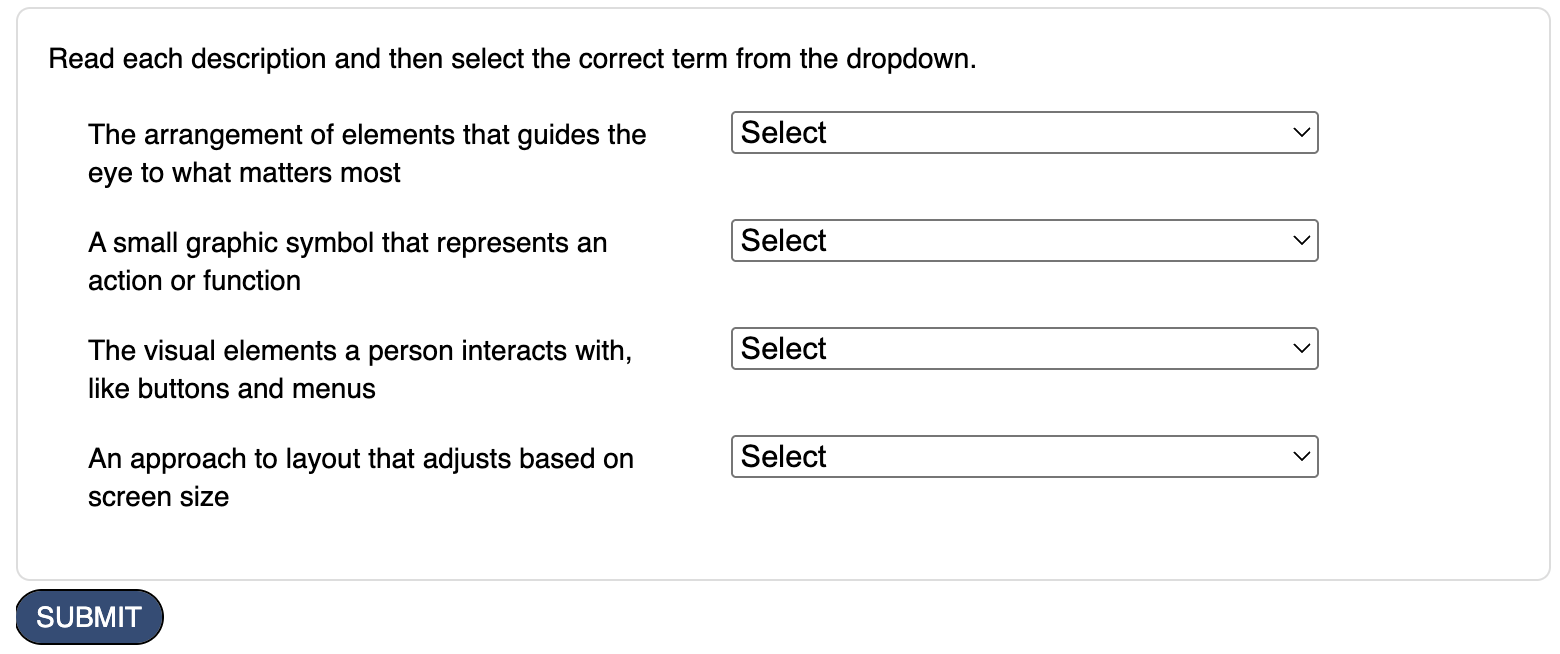
Example: Correct Answer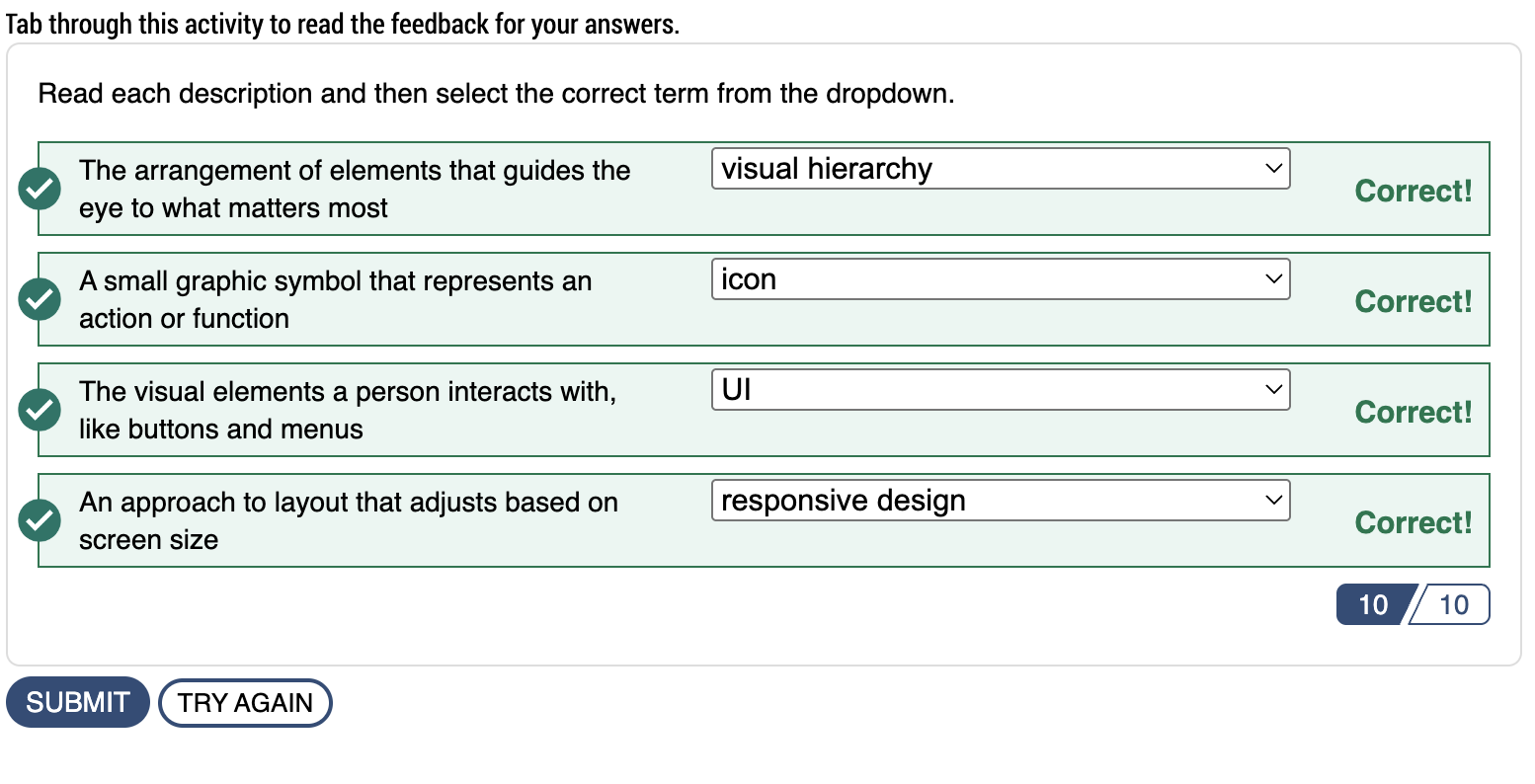
Example: Incorrect Answer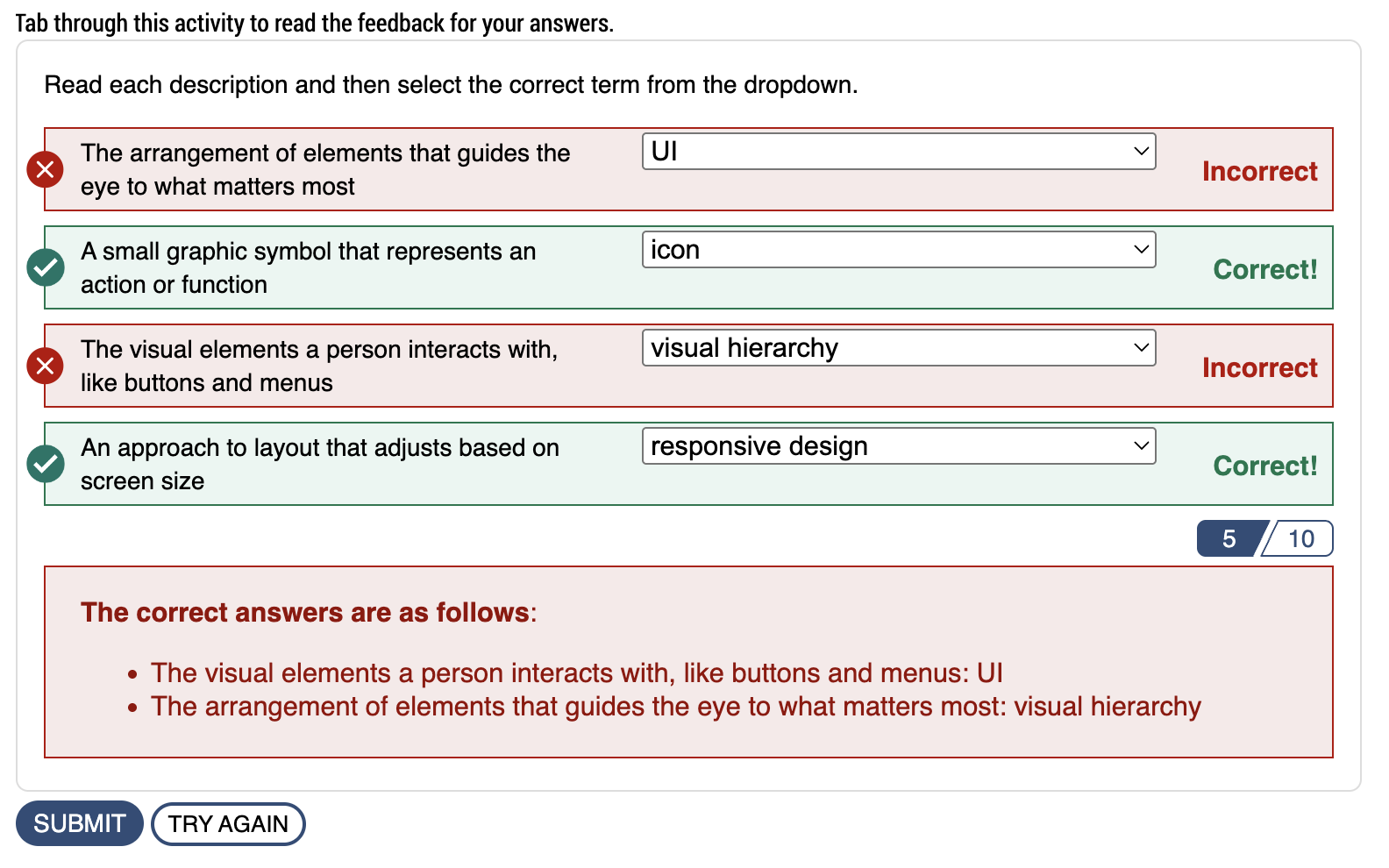
Refer to the following articles for more information about the different Quiz block question types:
How do I create a matching question?
How do I create a multiple choice question?
How do I create an ordering question?
Was this article helpful?
That’s Great!
Thank you for your feedback
Sorry! We couldn't be helpful
Thank you for your feedback
Feedback sent
We appreciate your effort and will try to fix the article